The Cancer Survivors Network (CSN) is a peer support community for cancer patients, survivors, caregivers, families, and friends! CSN is a safe place to connect with others who share your interests and experiences.
2nd time diagnosed with anal cancer in 1.5 years

When I was diagnosed with cancer I had zero signs. They found it by a CT scan for my knee replacement. I was sent to the cancer center. I was told it is completely treatable. So I had chemotherapy by IV (3times) and pills, and radiation. That burned me so much. During all this I got Covid. So that made is worse.
They said it was gone during exams. But I couldn’t handle the exams and had to be put under. But before all this in Dec 2025 I had a CT with contrast, MRI with contrast and waiting on the Pet scan.
The doctors said they couldn’t find anything but the MRI had lit up. So we got the PET done and it also lit up.
What has happened it that anal wall has thickened. So it wasn’t visible. My doctors said that my case is an unusual case and they are not sure if it’s curable. It tore me apart.
Well I started my journey again on 1/9/26. An all day event. Sick for 9 days. Lots of diarrhea, sleeping lots, can’t eat. I’ve lost 9 lbs so far. It’s hard to eat.
I eat jello, pudding, yogurt, chic fil a nuggets 3-4 of them and that’s it. Everything has a metal taste. OrI just can’t eat.
I have the next treatment on 1/30. Every 21 days. It will be 6-8 times. My treatment is CarboTaxol. I’ll have a Port place in Monday as my veins roll. I’ll lose my hair. No big deal deal for me. I’m trying to stay healthy and strong to get through all this.
I’m glad I found this site to post on.
Comments
-
I'm sorry you're going through this again. Once is plenty! Have you considered a second opinion since your doctor said it's very rare? I'd want to talk to someone else and possibly get a more positive information on a possible cure.
When I was diagnosed, my medical oncologist suggested a special chemo procedure, TIP, to have before the regular chemo drugs, 5-FU and mitomycin. I had to be hospitalized for 4 days because the procedure lasted 8 hours each night; I had to stay an extra night because I was sick. It greatly shrank my tumor, and even the radiation oncologist was amazed. I think it made a big difference in my survival.
Here is what I found online about it. When I had my treatments in 2013, the only thing I could find was the trial study my oncologist had used it for. You might ask your oncologist if he/she has used these chemo drugs, since they are for metastasized or returning cancer. Best of luck to you! And always advocate for yourself. Or if you're not good at that, find someone who is and get them to help you.
TIP chemotherapy for anal cancer stands for a combination ofPaclitaxel(Taxol),Ifosfamide, andCisplatin, often used for recurrent or metastatic anal cancer, as these drugs show promise in squamous cell cancers, similar to anal cancer. While standard anal cancer treatment often involves5-FU/Mitomycin or5-FU/Cisplatin, TIP offers another option, especially when the cancer has spread or returned, leveraging its effectiveness in other HPV-linked cancers like head and neck or cervical cancers, notesthe NIH.The TIP Drugs Explained:Paclitaxel(Taxol): A taxane that interferes with cell division, stopping cancer cells from growing.Ifosfamide: An alkylating agent that damages cancer cells' DNA.Cisplatin: A platinum-based drug that also binds to DNA, preventing cancer cells from replicating.
When TIP Might Be Used:Recurrent or Metastatic Disease: When anal cancer has spread or come back after initial treatment.Squamous Cell Analogy: Because anal cancer is often a squamous cell carcinoma, TIP's success in other squamous cancers makes it a logical choice, according to the NIH.
Other Common Chemotherapy Combinations for Anal Cancer:Standard (Nigro Protocol): 5-Fluorouracil (5-FU) with Mitomycin C, often with radiation.For Advanced Cancer: 5-FU with Cisplatin, or Carboplatin with Paclitaxel, orFOLFOX(Oxaliplatin, Leucovorin, 5-FU).
-
-
I also found this:
In 2026, a person with both anal cancer and rheumatoid arthritis (RA) can potentially receive theTIP chemotherapyregimen, though it is not the standard first-line treatment for anal cancer and requires careful coordination between an oncologist and a rheumatologist.Use of TIP for Anal CancerTheTIPregimen is a combination of three drugs:Taxol (paclitaxel),Ifosfamide, andPlatinum (cisplatin).Not First-Line:For localized anal cancer, the standard treatment is chemoradiation using 5-fluorouracil (5-FU) and mitomycin. For advanced or metastatic cancer, carboplatin and paclitaxel are typically preferred.Salvage Therapy:TIP is occasionally used as a "salvage" or secondary treatment for advanced or recurrent anal cancer that has not responded to other drugs.
Special Considerations for Patients with RA
Having RA does not automatically disqualify someone from receiving TIP, but it introduces specific management challenges:Immune Suppression:Both RA treatments (like biologics or methotrexate) and TIP chemotherapy suppress the immune system, significantly increasing the risk of serious infections.RA Flares:Chemotherapy may cause RA to flare, or it may temporarily suppress RA symptoms because the drugs also attack overactive immune cells.Drug Coordination:Doctors often suggest pausing certain RA medications while undergoing intensive chemotherapy to reduce the risk of severe toxicity or infections.Monitoring:Patients with RA are at higher risk for complications like myelotoxicity (low blood counts), which occurred in over 90% of patients in some TIP studies.
Typical First-Line Alternatives
Because TIP is highly toxic, oncologists may first consider less intensive options:Carboplatin and Paclitaxel:Currently the preferred first-line treatment for advanced anal cancer due to better survival outcomes and fewer side effects than TIP.5-FU and Cisplatin:Another common combination for advanced cases.
Note:Treatment decisions must be individualized. Consult your oncology team to determine if your specific RA symptoms and overall health allow for the intensive TIP regimen. -
Hi,
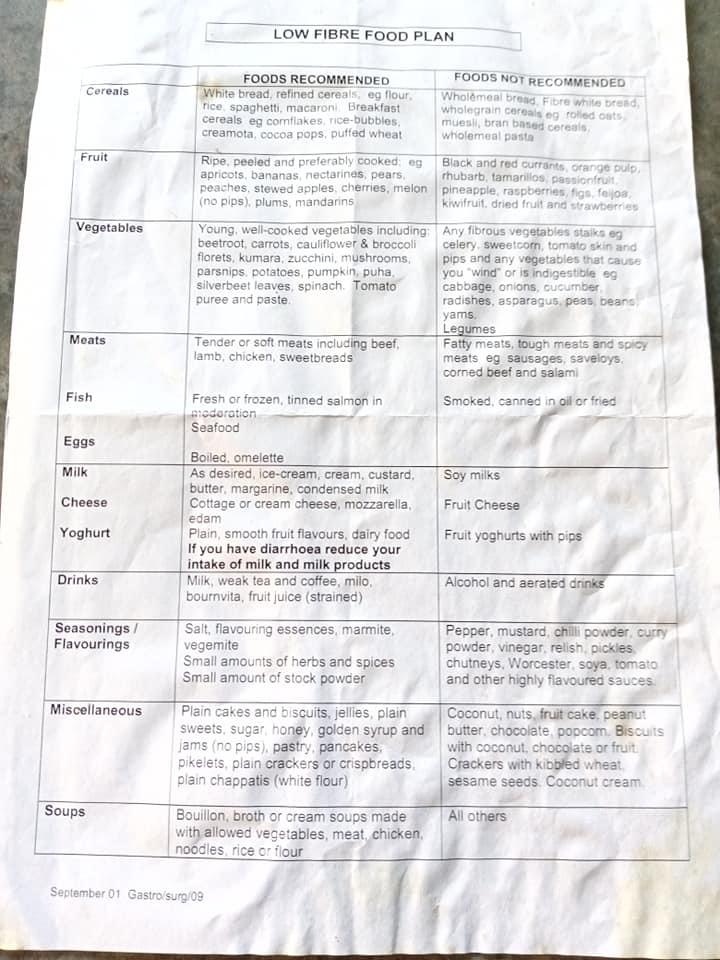
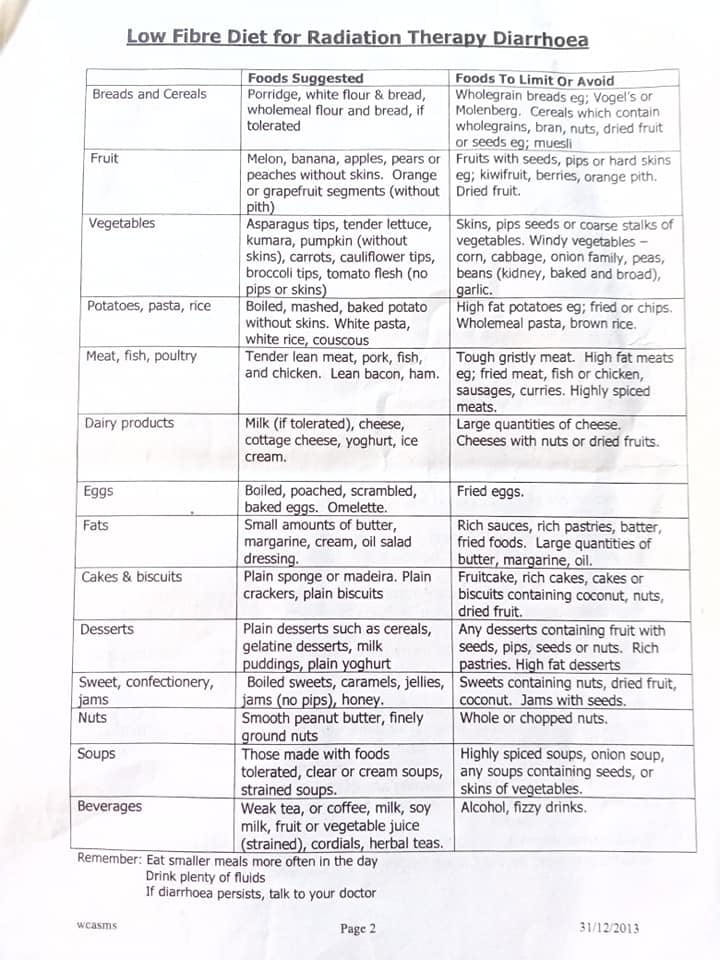
These are the food lists I got given from my hospital when I had treatment to help manage diarrhoea. One is low fibre and the other is which foods are recommended and not recommended for radiation therapy diarrhoea
I found this very helpful, so I hope it's helpful to you too.
Take care and good luck


Discussion Boards
- All Discussion Boards
- 7 Cancer Survivors Network Information
- 6 Welcome to CSN
- 1 CSN Update
- 122.7K Cancer specific
- 2.8K Anal Cancer
- 457 Bladder Cancer
- 311 Bone Cancers
- 1.7K Brain Cancer
- 28.6K Breast Cancer
- 410 Childhood Cancers
- 28K Colorectal Cancer
- 4.6K Esophageal Cancer
- 1.2K Gynecological Cancers (other than ovarian and uterine)
- 13.1K Head and Neck Cancer
- 6.4K Kidney Cancer
- 682 Leukemia
- 805 Liver Cancer
- 4.2K Lung Cancer
- 5.1K Lymphoma (Hodgkin and Non-Hodgkin)
- 243 Multiple Myeloma
- 7.2K Ovarian Cancer
- 71 Pancreatic Cancer
- 494 Peritoneal Cancer
- 5.7K Prostate Cancer
- 1.2K Rare and Other Cancers
- 545 Sarcoma
- 745 Skin Cancer
- 663 Stomach Cancer
- 194 Testicular Cancer
- 1.5K Thyroid Cancer
- 5.9K Uterine/Endometrial Cancer
- 6.5K Lifestyle Discussion Boards